
By William B. Njonja
Since the escalation of the Anglophone crisis in October 2016, activists advocating the rights of English-speaking Cameroonians have increasingly faced arrests, detention and intimidation, forcing many to flee the country while others remain in prolonged pre-trial detention.
Observers say the situation has significantly reduced freedom of speech, as many citizens now fear expressing opinions or engaging in public debate about the crisis. Activists say the climate of fear has pushed several campaigners into exile, while those who remain risk arrest or long periods of detention without trial.
Members and supporters of the Southern Cameroons National Council (SCNC) are among those most affected by the crackdown. Arrests and detentions have reportedly taken place in towns such as Buea, Kumba, Bamenda, Wum, Kumbo, Nkambe, Kombone, Tiko and Mamfe.
According to activists, those arrested are often taken to police or gendarmerie stations, while others are held in military facilities. Some detainees are reportedly kept incommunicado for extended periods. Rights advocates argue that such practices violate Article 9 of the International Covenant on Civil and Political Rights, which guarantees the right to liberty and protection from arbitrary arrest or detention.
Concerns about the safety of activists deepened following the life sentences handed down to several Anglophone leaders who have been in detention since January 5, 2018. Among them are Seseko Ayuk Tabe, Nfor Ngala Nfor and Wilfred Tassang. The three were arrested in Nigeria and transferred to Cameroon where they were charged with treason. They were reportedly held incommunicado for about nine months before their trial began and were eventually sentenced to life imprisonment on August 20, 2019.
Human rights observers say their conviction heightened fears among other activists and sympathizers, many of whom subsequently went into hiding or fled the country.
Several activists have also spent long periods in detention. Among those frequently cited by campaigners are Mancho Bibixy, Felix Ngalim, Yuka Edward and Bah Paulinus. According to activists, many detainees continue to suffer deteriorating health conditions after years in custody.
Another activist, Abdul Karim, who has faced several arrests in the past for condemning alleged rights abuses, was reportedly rearrested and is currently languishing in pre-trial detention in Yaoundé.
Other activists recount similar experiences. Tabe Florence Ngoasong, who joined the Southern Cameroons National Council in October 2001, says she was arrested and detained twice by security forces — on October 1, 2010 and July 8, 2011 — in Kombone Mission before being taken to the Kumba police station.
The death in custody of journalist Samuel Wazizi in 2019, after he was arrested while reporting on the Anglophone crisis, also sent shockwaves through activist circles and reinforced fears among journalists and campaigners.
Observers say these developments have contributed to a growing climate of fear in which many citizens are reluctant to speak openly about the crisis or participate in political discussions.
The conflict has also triggered a humanitarian crisis. According to international humanitarian organizations, more than 80,000 Cameroonians have fled to neighboring Nigeria as refugees, while hundreds of thousands more have been internally displaced within Cameroon as violence continues in parts of the Northwest and Southwest regions.
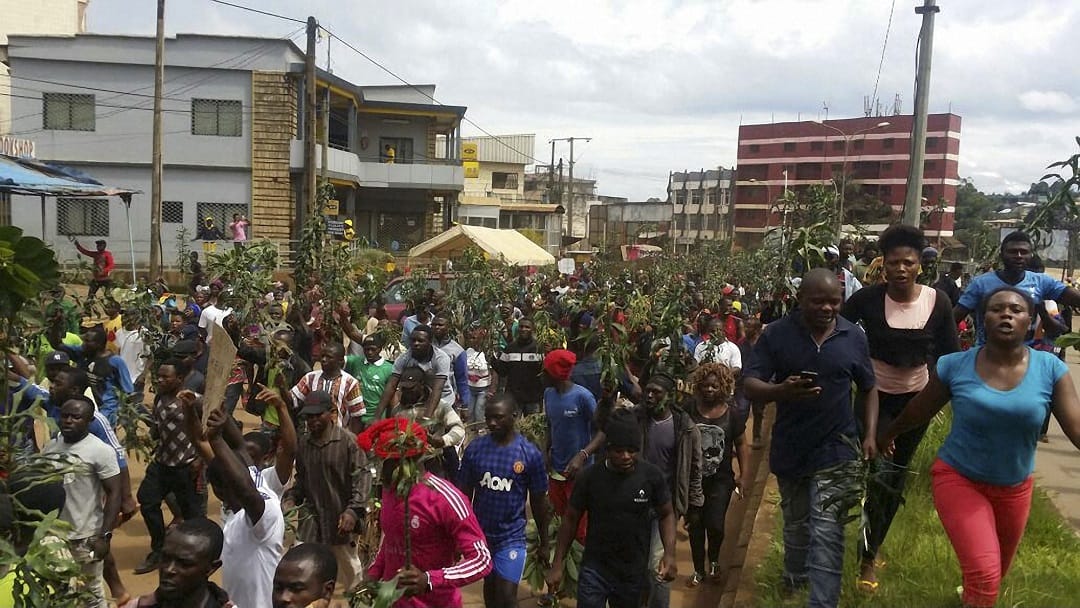
The Anglophone crisis began in October 2016 when common law lawyers in the English-speaking regions staged protests demanding respect for the common law system used in Anglophone courts. Among their demands were the use of English in court proceedings and the appointment of judges trained in the common law tradition.
Teachers later joined the protests, raising concerns about the deployment of French-speaking teachers who were unfamiliar with the Anglophone education system. Security forces moved to disperse the demonstrations, leading to arrests, injuries and the expansion of the protest movement.
Nearly a decade later, the crisis continues to affect political activism and public discourse, with many activists either in detention, in exile or afraid to speak openly about the future of the Anglophone regions.