
By Etienne Nfor Liboh
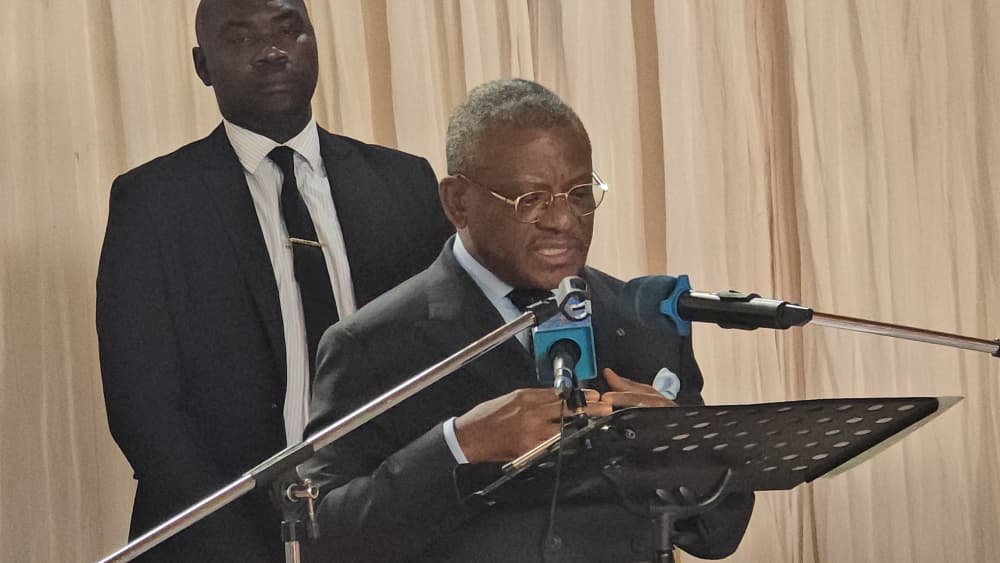
The Prime Minister, Chief Dr Joseph Dion Ngute, has taken the community dialogue initiative to the Northwest Region, where residents have called for improved public services, job opportunities, better security and concrete action to restore peace.
The Prime Minister made the appeal on October 15, 2026, at the Bamenda Congress Hall, where he met traditional rulers, religious leaders, civil society actors, youth representatives and other stakeholders from across the region’s seven divisions.
The initiative, which follows the 2019 Major National Dialogue held in Yaoundé, seeks to strengthen community participation in efforts to end the Anglophone crisis, which began in 2016 and has disrupted social and economic life across the Northwest and Southwest Regions.
Addressing participants, Dion Ngute said military operations alone could not bring the conflict to an end, stressing the need for communities to take an active role in reconciliation.
“The military has stabilised the region, but the military cannot get into every hole to bring out the separatists. So our ultimate responsibility to end these miseries rests on our shoulders. No other person will do it for us,” he said.
The Prime Minister called on families, traditional rulers and community leaders to engage fighters still in the bushes and encourage them to abandon armed violence.
Describing the Northwest as a region known for its culture and hardworking population, he said the conflict had caused destruction, deaths and other serious crimes over the past decade.
“We must put an end to this senseless war. The people fighting are our children, our relatives, our junior brothers and sisters,” he said, urging residents to work towards ending the violence.
Residents call for action on basic services
While the government emphasised peace and reconstruction, participants used the dialogue to highlight pressing concerns over unemployment, roads, electricity, water supply and security.
Several speakers said residents wanted practical improvements in their daily lives, arguing that dialogue would have greater impact if followed by visible results on the ground.
A community leader from Donga-Mantung called for better roads to transport farm produce, reliable electricity and water, and safer journeys between Bamenda, Santa, Kumbo and Wum.
Participants also raised concerns about the condition of the Bamenda road, power cuts in Nkambe and Wum, unreliable water supply in parts of Nkwen and Mankon, and the continuing impact of the crisis on businesses and livelihoods.
The concerns reflected calls for the government to complement its peace efforts with measures to improve living conditions and create economic opportunities, particularly for young people.
Governor outlines reconstruction progress
Northwest Governor Adolphe Lele Lafrique outlined ongoing development efforts and security challenges, noting that administrative and technical delays had affected the execution of some projects in 2026.
He said 77 projects had been targeted for the region under the Presidential Plan for Reconstruction and Development (PPRD) during the 2025–2026 period. Of these, 25 had been completed, while others remained underway, representing a reported physical execution rate of 66 per cent.
The Governor also highlighted cooperation between the population, traditional rulers, religious authorities and security forces, saying stronger collaboration could improve security operations.
He urged residents to report suspicious activities to the relevant authorities, invoking the principle of “see something, say something” as part of efforts to support security and stability.
Meanwhile, Minister Paul Tassong, President of the PPRD Steering Committee, said reconstruction required more than the provision of infrastructure and public amenities.
“Building infrastructure and amenities will not solve the problems on their own,” he said, emphasising the importance of rebuilding social cohesion and strengthening community institutions.
Tassong said the programme had constructed 18 multipurpose halls for women and girls and three traditional palaces. He also reported that verification checks were underway on more than 20,000 housing reconstruction requests to guide the allocation of support.
Traditional rulers seek greater inclusion
The dialogue also provided an opportunity for representatives of the region’s divisions to present concerns and propose ways of addressing the conflict.
Speaking on behalf of traditional leaders in Menchum Division, Fon Mbuh II of Weh called for greater political representation and equitable access to opportunities.
He said Menchum had not produced a minister or director-general since reunification, arguing that representation in senior government positions could help communities access development opportunities.
The Fon also said traditional rulers in the division were prepared to organise grassroots discussions with young people, including those involved in the conflict, to encourage their return to civilian life.
Participants broadly called for future dialogue sessions to extend beyond Bamenda to villages and traditional communities across Bui, Momo, Menchum, Boyo, Ngoketunjia and Donga-Mantung, alongside Mezam.
They proposed greater involvement of Fons, quarter heads, women’s Common Initiative Group leaders, traders, motorbike riders and other community representatives to ensure that discussions reflected local needs.
Youth unemployment and reintegration concerns
Rev. Mekom Samuel, Northwest Regional President of the Cameroon National Youth Council, urged the government to address youth unemployment, substance abuse and delays in reintegrating former fighters.
He called for continued efforts to curb the importation of hard drugs, which he said had contributed to problems among some young people.
Mekom maintained that the vast majority of youths in the region were peaceful but faced unemployment, hunger and limited opportunities.
“Idleness and economic hardship leave young people vulnerable. We must create an enabling environment so evil ideas do not take root,” he said.
He also called for direct engagement with fighters still in the bushes, arguing that community leaders and other trusted intermediaries could help open channels of communication.
According to Mekom, some individuals who benefit financially from the crisis are not the people carrying weapons but those who allegedly organise kidnappings and collect ransom payments, leaving those carrying out the acts with only a small share.
He proposed a clearly defined reintegration package for fighters who voluntarily surrender their weapons, including specific support to help them return to civilian life.
“The delay in reintegrating young people who have already dropped their weapons creates hesitation for those still in the bushes,” he said, urging the authorities to speed up the process for former fighters at the Disarmament, Demobilisation and Reintegration (DDR) Centre in Bamenda.
He added that dialogue should reach communities directly and create opportunities for one-on-one discussions with those involved in the conflict rather than relying exclusively on intermediaries.
From dialogue to implementation
Participants stressed that the success of the initiative would depend on whether their concerns translated into practical measures, including completed roads, reliable public services, employment opportunities, rebuilt schools and effective reintegration programmes.
They also called for reconstruction and peacebuilding efforts to produce tangible results that could help rebuild confidence between communities and the State.
The meeting forms part of the government’s broader engagement with communities affected by the crisis. The Prime Minister is expected to convey the concerns and recommendations raised in Bamenda to the Presidency.
