
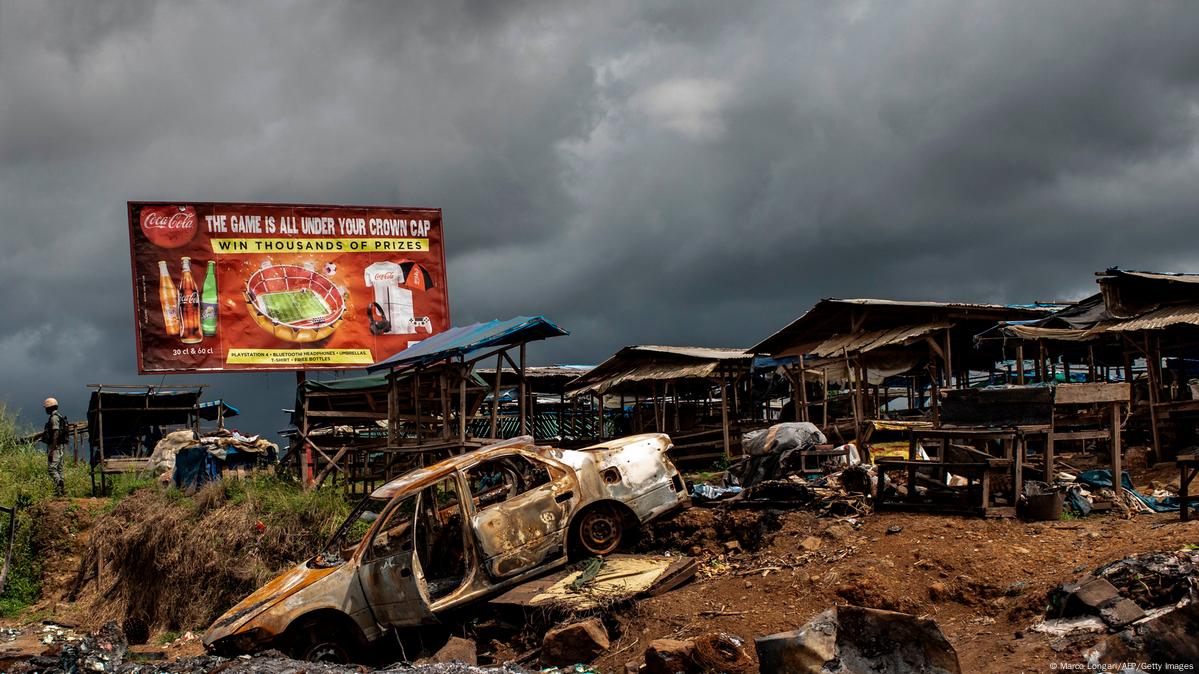
For activists of the Southern Cameroons National Council (SCNC), the Anglophone crisis has been a painful reminder that the pursuit of political independence through peaceful means has offered little protection from the violence and repression that have engulfed Cameroon’s two English-speaking regions.
Since the crisis escalated in 2016 and even before then, SCNC activists have been arrested, detained and, in some cases, forced to flee the country. Many have found themselves caught between government forces and armed separatists, despite having pursued their political objectives largely through peaceful advocacy.
The crackdown has affected activists and civilians in major towns including Buea, Kumba, Bamenda, Wum, Kumbo, Nkambe, Kombone, Tiko and Mamfe. Detainees have been held in police and gendarmerie stations, as well as military facilities, with rights groups and families repeatedly raising concerns about incommunicado detention and ill-treatment.
Among those most affected are activists who have long campaigned for the independence of British Southern Cameroons under the SCNC banner.
The imprisonment of Southern Cameroonian leaders following their arrest in Nigeria in January 2018 heightened fears among other activists. Sisiku Ayuk Tabe, Nfor Ngala Nfor, Wilfred Tassang and others were arrested in Nigeria, extradited to Cameroon and charged with offences including terrorism and secession. They were held for months before their trial and were eventually sentenced to life imprisonment in August 2019. They appealed leading to an overturning of the sentences and the cases are still to be retried in court again.
Their case became a powerful warning to other independence activists, many of whom subsequently reduced their public activities or left the country.
SCNC activist Tabe Florence Ngoasong, who joined the organisation in 2001, is among those who experienced the crackdown firsthand. She was arrested and detained in 2010 and 2011 after being picked up in Kombone Mission and taken to the Kumba police station.
Raphael Toh Lang, an SCNC activist, was arrested at a police checkpoint while travelling to Buea on January 5, 2014. He was taken to a police station, detained in a cell and reportedly subjected to severe beatings and torture while being deprived of food.
After spending time in detention, where he was reportedly tortured for information, Toh Lang escaped and has not been seen in Cameroon since. The prolonged conflict has further discouraged activists like him from considering a return, amid fears that they could be targeted, arrested and imprisoned if they came back.
Their experiences predate the current conflict but illustrate the long history of pressure faced by activists campaigning for the political future of the former British Southern Cameroons.
The conflict has since blurred the distinction between peaceful political activists and armed separatist fighters. Activists associated with the SCNC and other independence movements have often found themselves viewed with suspicion by security forces, while some have also faced pressure from armed groups.
For many, exile became the safest option.
Thousands of Anglophones have fled Cameroon since the outbreak of the conflict, seeking refuge in neighbouring Nigeria and other countries. Others have been internally displaced, with communities across the Northwest and Southwest emptied by fighting, military operations, kidnappings and other forms of violence.
The disappearance and later confirmation of the death of journalist Samuel Wazizi in government custody in 2019 further deepened fears among journalists, activists and their families. Wazizi had reported on the Anglophone crisis before his death was officially acknowledged by the government a year later.
The roots of the crisis lie in protests that began in 2016, when English-speaking lawyers and teachers demanded reforms to protect the common-law and English-language systems in the Northwest and Southwest. The protests initially centred on professional and governance grievances before growing into a wider movement.
While some activists called for a return to a federal system, groups such as the SCNC maintained their demand for the independence of Southern Cameroons.
The government’s response to the early demonstrations, including arrests and the use of force, helped deepen the confrontation. The emergence of armed separatist groups subsequently transformed the crisis into a protracted conflict.
Nearly a decade later, SCNC activists who chose peaceful political mobilisation have paid a heavy price alongside civilians and armed separatists. Arrests, detention, threats and exile have disrupted families and scattered an activist community that once operated openly inside Cameroon.
For those who fled, returning home remains fraught with uncertainty. For those who stayed, the conflict has narrowed the space for political activism and peaceful expression.
The experience of SCNC activists forms an often-overlooked part of the Anglophone crisis: the story of a movement whose pursuit of independence through political and peaceful means did not shield its members from the consequences of a conflict that eventually consumed much of the region.
By William B. Njonja