By Etienne Mainimo Mengnjo
The government of Cameroon has launched a nationwide crackdown on electricity fraud starting March 16, aiming to curb practices that cost the energy sector more than FCFA 60 billion annually in lost revenue.
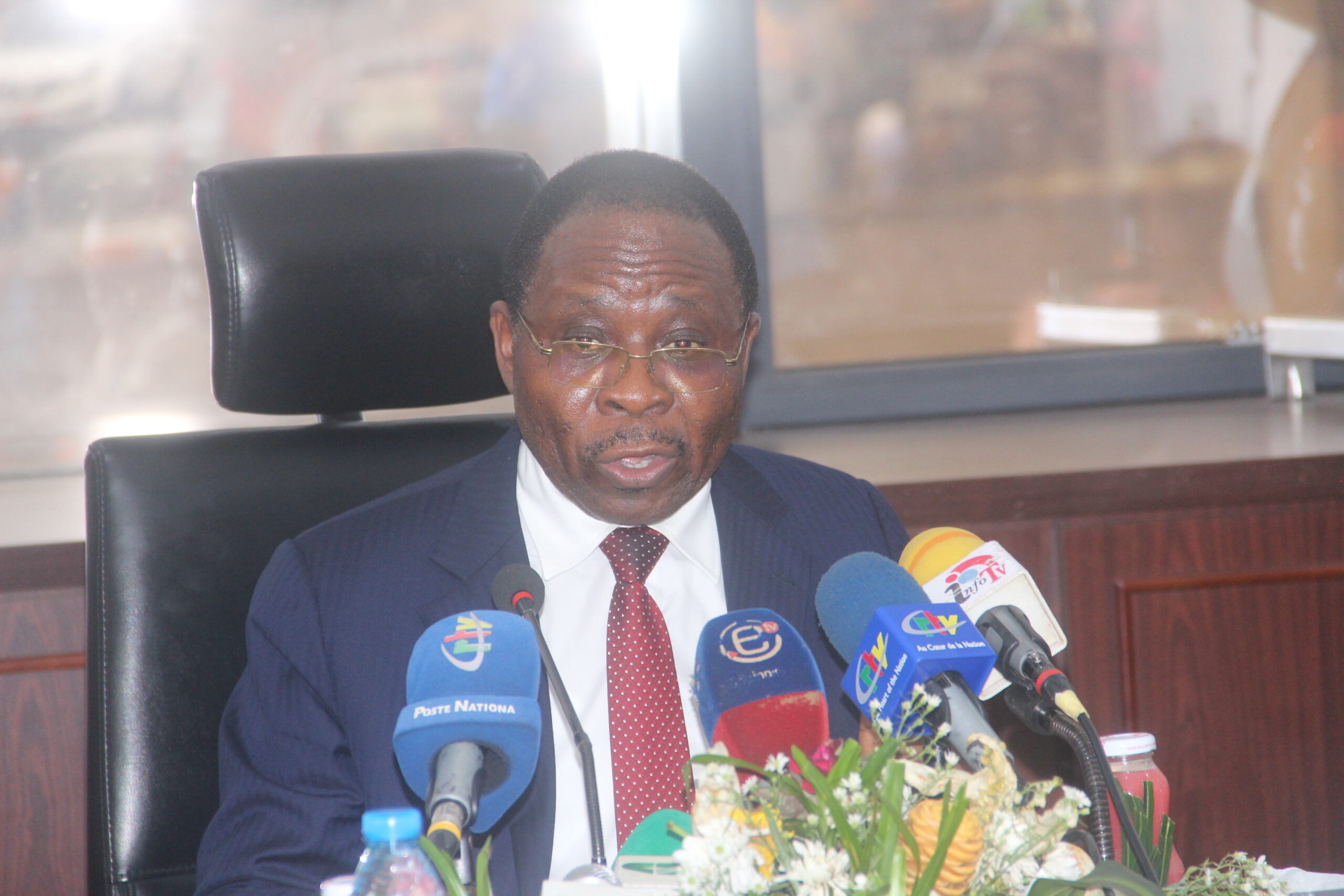
Gaston Eloundou Essomba, Minister of Water and Energy, announced the intensified operations on March 12 in Yaoundé during a consultation meeting that brought together stakeholders in the electricity sector including Energy of Cameroon (ENEO) and National Electricity Transport Company (SONATREL) as well as consumer associations.
The crackdown, the Minister said, targets illegal connections, meter tampering, unlicensed usage, and other forms of theft. He stressed that these measures follow the recent renationalization of ENEO and aim to recover funds necessary for infrastructure upgrades, transformer replacements, and improved service reliability.
Electricity fraud, termed by the Minister as economic sabotage, results in an estimated FCFA 60 billion in losses each year. Such losses he stated deprive the sector of essential investments, leading to unreliable supply, overloaded transformers, frequent outages, and even deadly accidents from illegal connections.
However, this initiative marks a shift from passive awareness to active restructuring. The Minister stressed that the primary goal is normalization and regularization, not merely punishment.
“The first objective is to normalize and regularize to ensure everyone pays for their electricity consumption, vital for the survival of the electricity sector and the well-being of all Cameroonians,” Minister Eloundou Essomba stated.
In many areas, the Minister noted that “barons of fraud” act as illegal intermediaries, supplying power through tampered installations or unauthorized networks. He warned that engaging with these operators is both dangerous and illegal.
“Paying these intermediaries exposes customers to sanctions and serious risks of electrical accidents,” the minister continued. “The population is urged to stop paying third parties or barons of fraud for electricity access. Citizens can legally access energy by regularizing their status or by contacting the appropriate agencies.”
The Minister stated that during the crackdown, government plans widespread sensitization campaigns underscoring that electricity is a commercially paid product, not a free resource. “My message to the public and households is clear: it is time to strengthen the relationship with the electricity sector,” the Minister asserted.
“We must improve our income levels, starting with one simple thing: everyone must pay their electricity bill,” he added.
Despite acknowledged service quality issues, the Minister affirmed that the State would continue funding development. “Aware of the poor quality of services, the government will continue to finance the development of electricity infrastructure to permanently enhance public service,” he said.
However, Consumer Associations, during the consultation meeting, thanked the government for its efforts in fighting fraud but raised concerns about increasingly sophisticated fraud techniques that evade detection by criminals.
“Criminals are clever and are multiplying strategies that allow them to thrive,” representatives from consumer groups said.
Concerns were raised regarding fraudulent practices within ENEO, specifically the unauthorized cancellation of bills and the resale of prepaid meters at inflated prices. This deep-seated fraud is further complicated by the ‘protégé syndrome and the involvement of influential figures, making eradication efforts significantly more difficult.
They proposed creating a cartography and typology of fraud and fraudsters, emphasizing the localization of fraud across the nation. “We are particularly concerned about the industrial sector, illegal trade, and manufacturing workshops,” they urged.
Consumer advocates pointed out that small-scale household fraud often overshadows the significant threats posed by powerful “barons” who intimidate inspectors.
“We have detected a manufacturing workshop and identified an agent supplying a neighborhood,” they noted. “But the real barons are the ones who threaten inspectors with weapons, attempting to block legitimate access.”
They stressed that ordinary consumers lack the power to resist these operators, while ENEO agents encounter barriers during inspections.
“The big barons often intimidate agents, refusing them access,” a representative emphasized. “The government must take this seriously; that is where the problem lies, Mr. Minister.”
Concerns were also raised about internal issues within ENEO, including canceled invoices and corruption. “There is significant internal fraud within ENEO, including the cancellation of invoices in their system. I speak from personal experience,” one association member said.
To improve reporting and engagement, they proposed establishing a dedicated free hotline accessible to all consumers, including those in remote areas lacking connections, to anonymously report fraud.
“A hotline for all consumers, even those in remote areas where ENEO does not exist, is essential,” they suggested.
This sustained campaign, involving ENEO, public authorities, and consumer groups, seeks to eradicate entrenched practices and foster a healthier sector for all Cameroonians. Citizens are encouraged to regularize their accounts and promptly report suspicions as the crackdown unfolds.
