
By Etienne Nfor Liboh
Atanga Ni and other government officials call them pockets of resistance. It is a softer phrase, borrowed from military language and seemingly designed to suggest that the worst is over, that the war has shrunk and that what remains is small, contained and manageable. But the numbers tell a different story. Behind the phrase lies an ocean of tears.
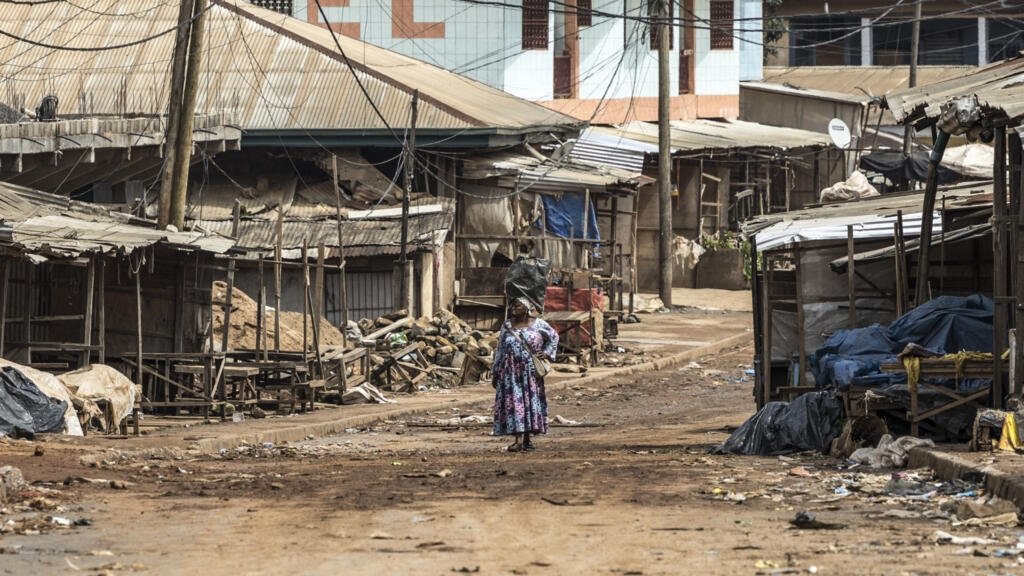
Cameroon’s Anglophone Crisis is now in its 10th year. Since 2016, government forces and armed separatists have been locked in a conflict across the Northwest and Southwest Regions, with civilians bearing the brunt of the violence.
The toll is staggering. The International Crisis Group put the death toll at more than 7,000 in April 2026, while about one million people were displaced at the height of the fighting. According to the UN Office for the Coordination of Humanitarian Affairs (OCHA), 493,402 people remain internally displaced across the two regions in 2026, while more than 76,000 have fled to neighbouring Nigeria as refugees.
The humanitarian crisis extends beyond deaths and displacement. OCHA reported in early 2026 that 45 per cent of schools in the Anglophone regions were not functioning. The UN Refugee Agency (UNHCR) also recorded 2,527 protection incidents across the two regions between January and September 2025 alone. At the height of the crisis, more than 780,000 children were out of school, with over 80 per cent of schools in the restive regions closed.
These are hardly the figures of a conflict confined to a few pockets. They point instead to a prolonged humanitarian catastrophe.
In Ndop, a farmer who asked not to be named for fear of reprisals says even going to the farm has become a risky undertaking.
“We used to go to the farm at 5 am. Now we wait to hear if there was shooting in the night. If we go, we don’t know if we will come back. Some of our brothers went and never returned,” he said.
His experience is shared by countless farming families across the region. Farms have been abandoned, harvests lost and livelihoods destroyed. Many families now survive on whatever food they can afford to buy, whenever markets open and movement is possible without the threat of a lockdown or violence.
For some, funerals have become more common than weddings, graduations or any other occasion for celebration.
A commercial motorbike rider in Bamenda, who transports patients, traders and students daily, describes the roads as his own battlefield.
“Sometimes the military stops you. Sometimes the boys stop you. You don’t know who is who. You just pray. If you don’t ride, your family will not eat. If you ride, you may not return. That is our life now,” he said.
Commercial motorbike riders, traders and taxi drivers remain among those most exposed to the dangers of the conflict, caught between military checkpoints, separatist restrictions, lockdowns and crossfire. For many, earning a living has become a daily gamble with their lives.
Analysts argue that the shift in language, from ‘war’ to ‘crisis’ and now ‘pockets of resistance’, reflects a political desire to project a return to normality, particularly as the country approaches the twin Legislative and Municipal Elections scheduled for February 7, 2027.
But for ordinary people, changing the words has done little to change the reality on the ground.
While politicians in Yaoundé discuss elections and their counterparts in Bamenda talk about reclaiming political seats, ordinary citizens are asking a much more basic question: when will the killing stop?
The crisis may have entered its tenth year, but the language has changed while the coffins keep coming.
Across the accounts of those living through the violence, one demand stands out: peace must come first. They want more than political slogans, campaign promises or calculations about electoral victories. They want to farm without fear, trade without fear, send their children to school without fear, travel without fear and sleep peacefully. Above all, they want to bury their loved ones after long lives, not because bullets have cut them short.
As one elderly man in Bamenda put it: “We have heard enough talk. We want to live. That is all.”
Until the killing stops, every other conversation about elections, development and politics will remain secondary to people whose daily lives are still overshadowed by the threat of death.
