
4
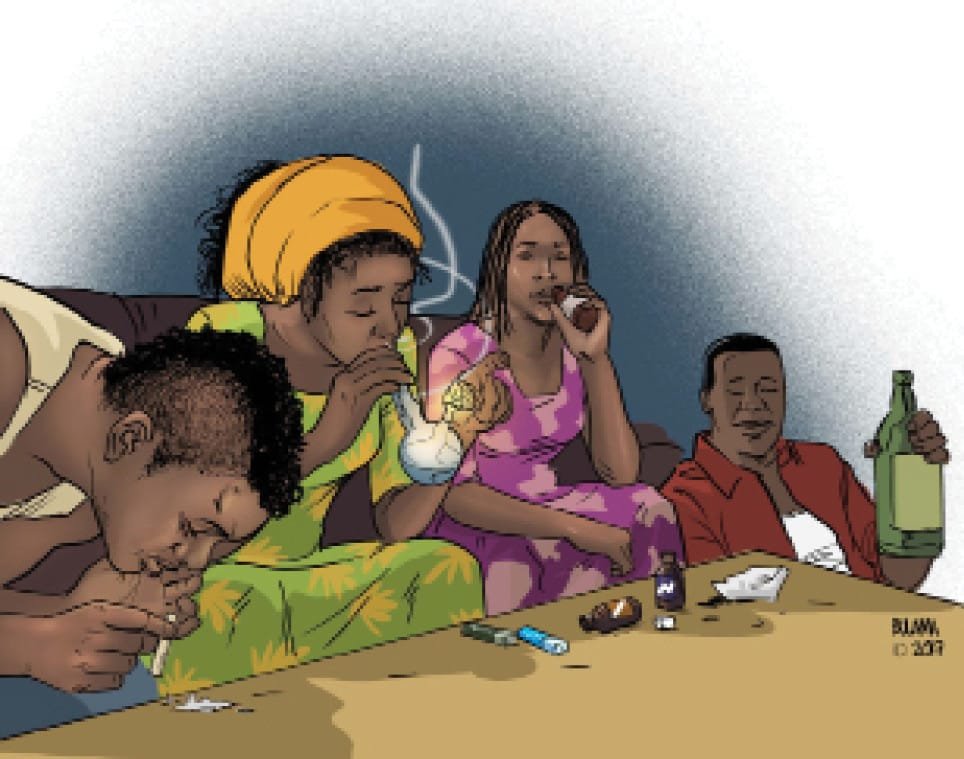
In Cameroon, the growing abuse of drugs among young people has become a serious public health and security concern. Data from the National Anti-Drug Committee (CNLAD) indicates that about 21 percent of the population has experimented with hard drugs, with more than 60 percent of users reportedly below the age of 25.
In neighbourhoods across Yaounde, Douala, Bamenda and Garoua, teachers, families and community leaders are increasingly asking why tramadol, cannabis and other substances once considered marginal are now visible among schoolchildren and university students.
The familiar explanations are unemployment, idleness, peer pressure and social media. They all matter. But there is one factor that deserves attention: many young people are growing up disconnected from their cultural and family histories.
Every stable society gives its young people a sense of identity, a code of conduct and an idea of where they fit into the future. History can provide the first two.
It can tell a young person that they come from people who endured, who laboured with heroism, built families under difficult circumstances and women who sustained through hardship. It can preserve the stories of teachers who walked long distances to educate young people, of traders in local markets and public servants whose lives were defined by sacrifice.
When such stories disappear or are reduced to dates and names for examinations, young people inherit little historical knowledge. They can lose examples of how previous generations survived hardship.
Sociologist Emile Durkheim described a condition of weakened social norms as “anomie”. When values become unclear, individuals can struggle to find clear standards by which to guide their behaviour. For young people, the absence of a strong sense of belonging can make alternative forms of identity and community attractive.
This is where drugs become particularly dangerous. They promise escape, belonging and a sense of identity.
Cameroon’s older generations often grew up within a culture that placed considerable emphasis on discipline, community, legality and self-restraint. These values were reinforced at home, at schools, churches, mosques and communities.
The problem today is not that young people have suddenly rejected those values. Instead, they face competing messages about what success and fulfilment mean. Social media and popular culture can sometimes glorify conspicuous consumption, quick wealth and immediate gratification.
At the same time, the traditional chain linking young people to elders has weakened.
In many African communities, history was not confined to textbooks. People passed it from one generation to another through stories, proverbs, ceremonies, and everyday conversation. Urbanisation and the digital revolution have disrupted much of that oral tradition.
A young person may live in Yaounde while having parents whose roots are in the Northwest, Far North or East. At home, the language that once carried history may no longer be spoken. At school, history can come as a subject to memorise rather than a living connection to identity.
This does not mean that ignorance of history causes drug abuse. The direct causes are much broader: youth unemployment, easy access to diverted pharmaceuticals, family instability, peer pressure, poverty and untreated mental health difficulties.
But a weakened sense of identity can remove important protective factors. A young person who knows where they come from, feels accountable to a community and has adults they trust may be better equipped to resist destructive influences.
Rebuilding those connections should therefore be part of the response to drug abuse.
This does not mean filling school timetables with more history as a subject to memorise, but making history relevant again: teaching local and family histories, inviting elders into schools to share experiences and values, and celebrating forms of belonging, discipline and resilience alongside material success.
It also means families need spaces where they can discuss pain, boredom, anger and failure without shame, and find healthier ways to belong: sport, music, faith, work and community activities.
Tackling youth drugs will require doctors, counsellors, law-enforcement agencies and stronger economic opportunities.
But it also needs families, community leaders and storytellers.
The goal is not to romanticise the past or blame young people for changing times. It is to ensure that, in a rapidly changing society, they do not lose the roots that can help them navigate the present.
Once young people know who they are, where they come from and where they belong, the promise of an artificial escape may become less powerful.
By Tegwi Solange

