
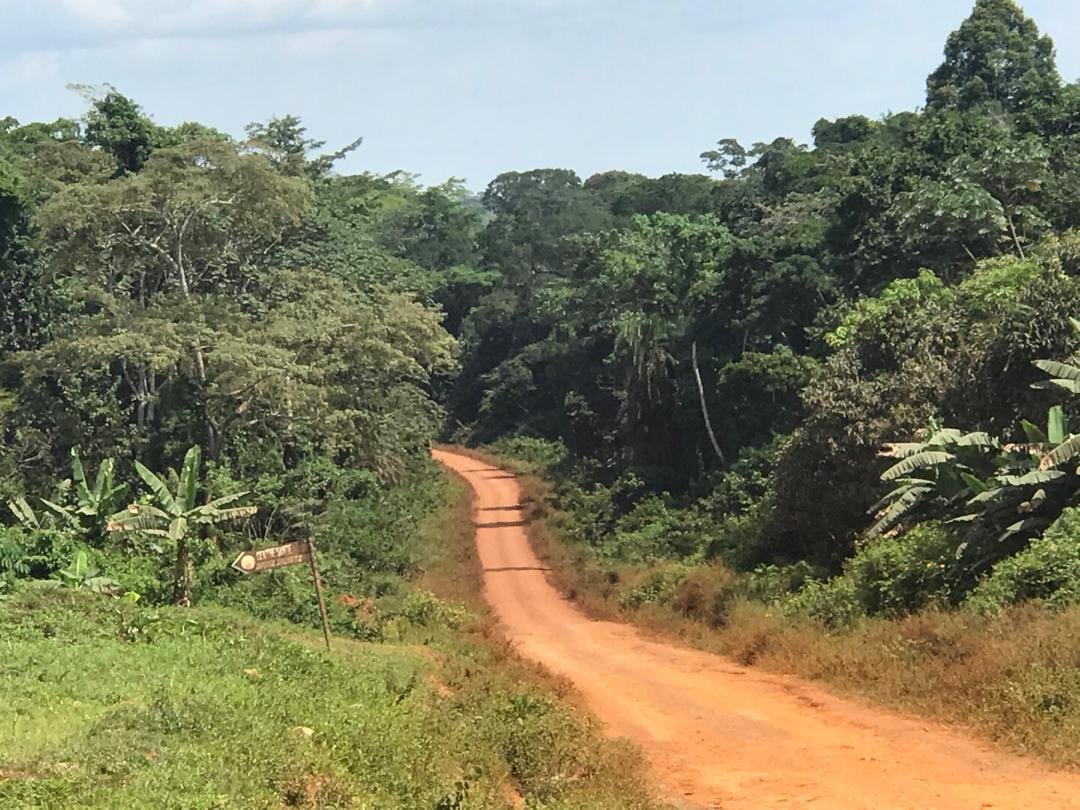
Community forestry was designed as a community empowerment tool, but has largely become a vehicle for elite capture and continued deforestation due to implementation failures.
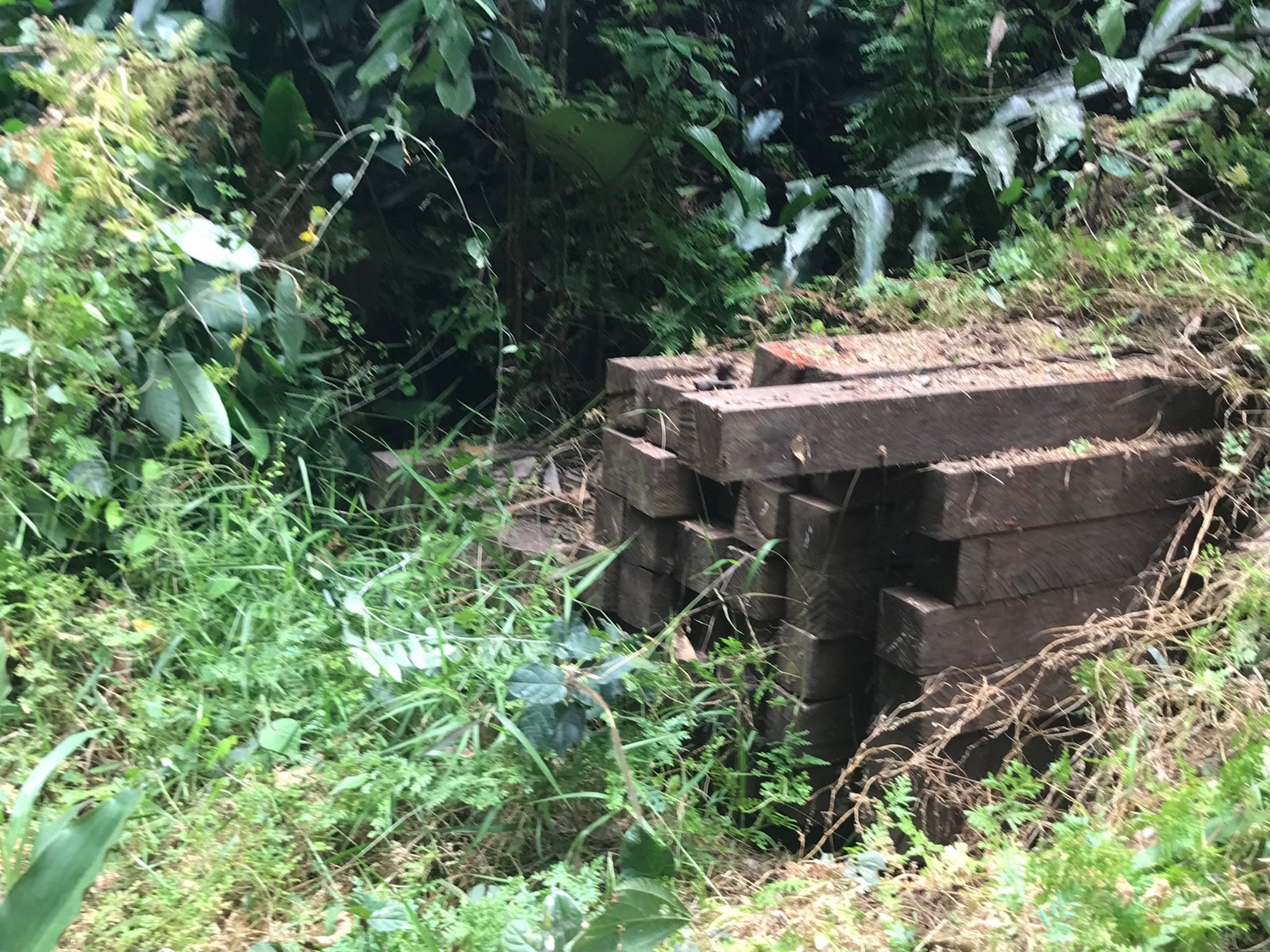
Abandoned wood in Nemeyong II Community Forest
Established by the 1994 Forest Law to promote sustainable forest management and improve local livelihoods, community forests in Cameroon have delivered mixed results in 31 years. While some communities report tangible benefits, systemic challenges persist, largely due to limited technical and financial support, complex bureaucratic procedures, and high costs of required documentation. This investigation focuses on community forests in Messamena and Ngoyla in Cameroon’s East Region.
On April 7, 2026, about 200 residents of Nemeyong II village, a two-hour motorcycle ride from Messamena in Cameroon’s East Region, gathered amid uncertainty from the suspension of logging in their community forest. Madame Edjap stayed in her kitchen, frying doughnuts for sale, despite the gloom that had settled over the community, as others pondered opportunities for a new start.
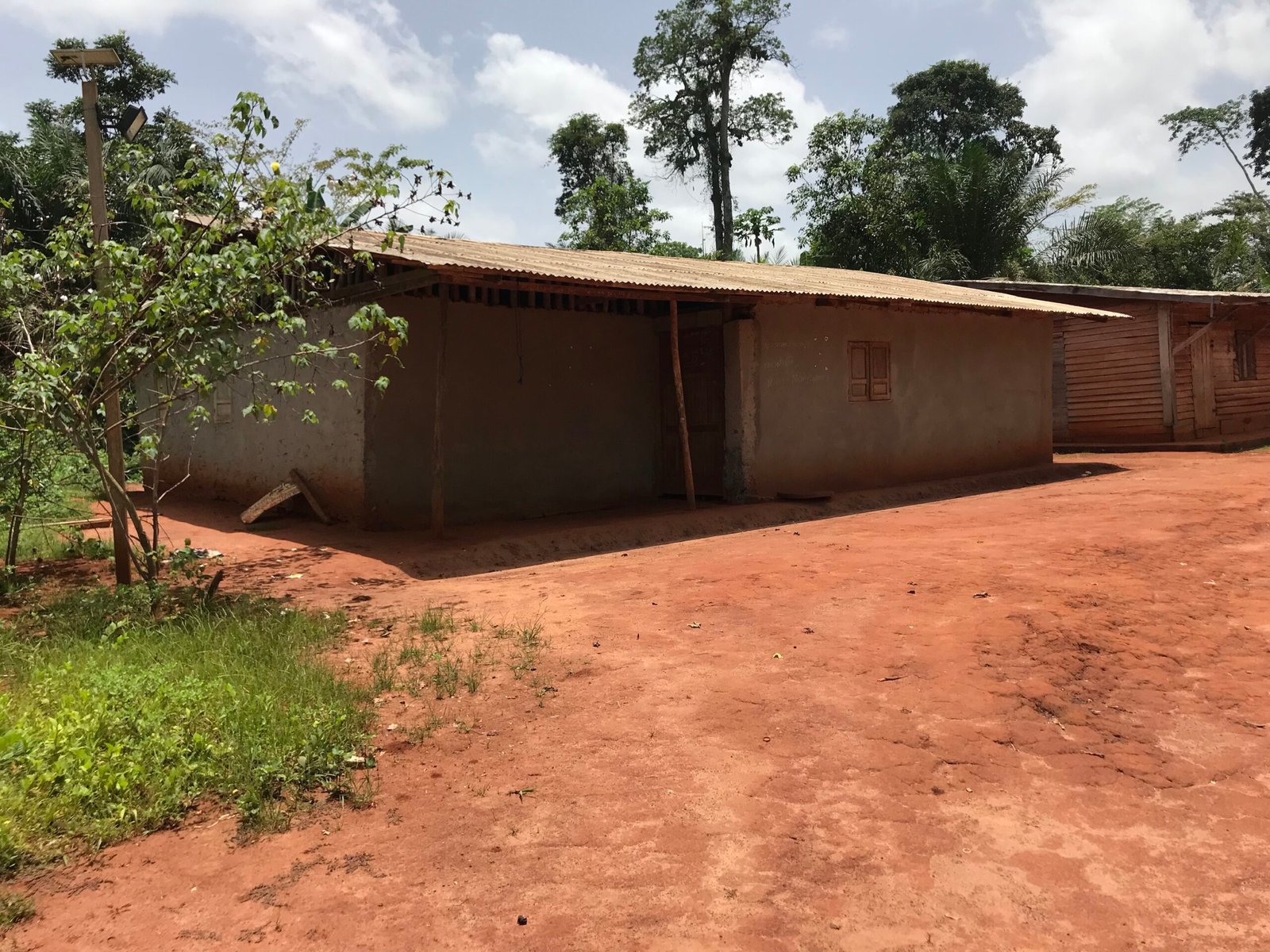
Nemeyong II residents have had a taste of community forestry benefits- the improvement of their daily lives over two logging cycles. “Managing our forest has helped us carry out projects, bringing life to the village. We paid a teacher at our public school at a rate of FCFA 25,000 ($43.72) per month for a year, installed solar streetlights illuminating the village, bought 40 roofing sheets each for 17 households, closed the openings and cemented the floor of our community hall,” lists Jean-Claude Cyrille Mamoho Edjap, chairman of the management committee of the 1385 hectare community forest managed by Lil Mpeme Common Initiative Group (CIG).
Community forests are non-permanent forest domains not exceeding 5,000 hectares, attributed to village communities that apply and obtain a two-year (non-renewable) provisional convention with the government. The community elaborates a Simple Management Plan (SMP), a basic 5–10-year forest management blueprint required for legal logging. It is granted an Annual Logging Permit (ALP)- an authorisation renewed every year for a permanent convention of 25 years, renewable. As of 2020, Cameroon had 762 community forests according to the Cameroon Forest Atlas- a dynamic, geographic information system (GIS) platform created to track, map, and manage land use and data within a country’s forest sector. Community forests spanned about 1.7 million hectares, 7 percent of Cameroon’s 34 million hectares total forest Area.
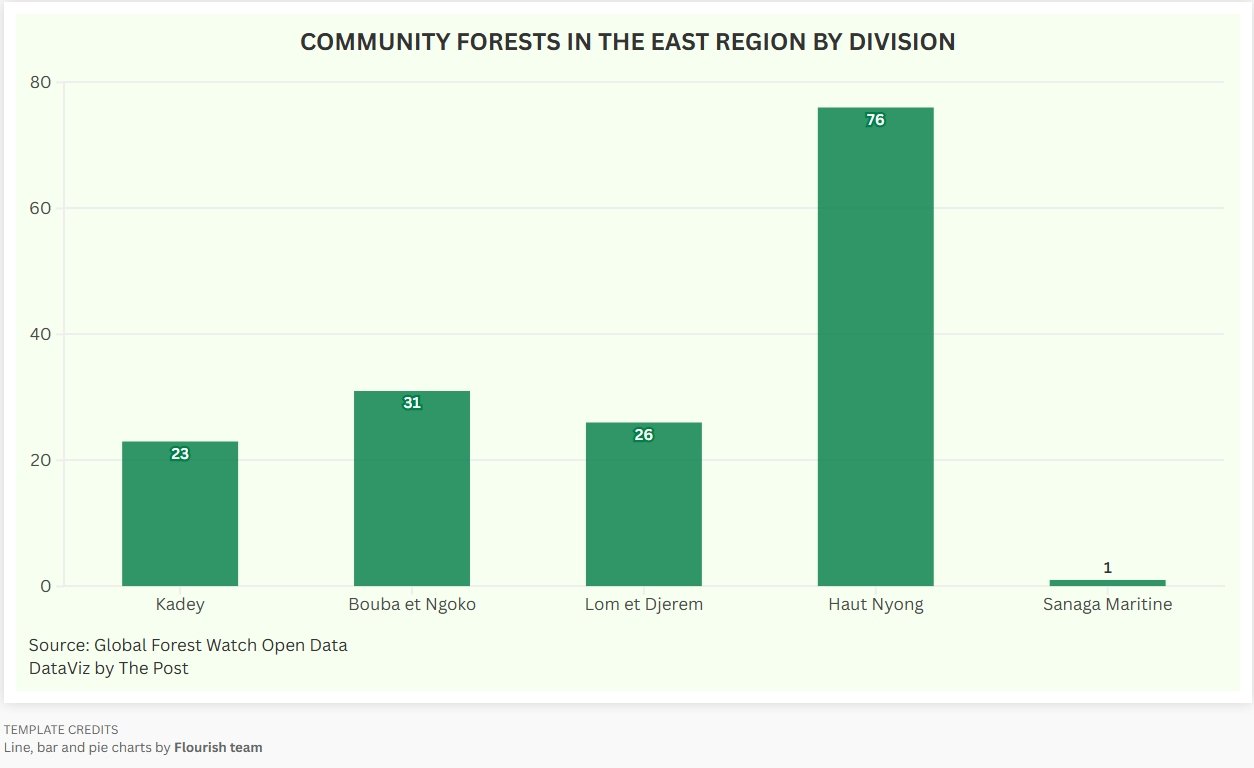
Data viz: https://public.flourish.studio/visualisation/29589430/
The logging period in Nemeyong II was equally a favourable time for women who improved their own businesses. “The company vehicle transported us to the forest where we gathered non-timber forest products (NTFPs) and sold them to buyers in the community. We ran food stalls and transformed some NTFPs into oils to add value, says Laurentine Biwélé Evina, a member of the community forest management committee and president of the CIG, Femmes Exemplaires (Exemplary Women).
The same surge was observed in the Ngoyla council, where WWF Cameroon helped facilitate the creation of community forests. “We have carried out projects, including electrification, improvement of housing for community members, built a house of worship and market stalls,” noted Armand Nkpwala Djioh and Clément Nkwala, respectively chairmen of the 3433-hectare Codongnko and the 400-hectare Etekessa community forests. WWF supported both financially and technically the creation of 100 community forests in four landscapes: Tri-national-TNS, TRIDOM, Kudu Zombo, and the Coastal Forest Programme. Presently, given the meager budget, assistance is limited to 10 community forests managed by the Baka-indigenous people and women in the Yokadouma, Moloundou, and Mintom areas of the East and South regions,” explains Alphonse Ngniado Wouala, WWF Forest and BIODEV Coordinator. Mepolo Ethene, a member of the Ndenbeh Baka community forest in the Mintom South region, says, “Within the provisional period, demarcation is underway to carve out portions for farming and logging.”
A solar lamp infront of the Nemeyong II Community Hall
A short-lived joy
In Ngoyla, WWF’s dwindling support has plunged some community forests without financial resources into difficulties. They are obliged to source funding to obtain the SMP at FCFA 5 million ($8693), FCFA 2 million ($3477)—to obtain an ALP from the Ministry of Forestry and Wildlife, MINFOF. This financial instability is caused by logging profits becoming a source of conflict and division rather than a driving force for progress; meanwhile, the forest vanishes, and the coffers are back in the red.
Community members accuse logging operators of violating agreed terms, exceeding harvest limits, and cutting undersized trees. But Patrick Ateba, Executive Secretary of the Cameroon Timber Industry Group (GFBC), says there are cases of unscrupulous operators engaging in fraudulent logging, the reason he is calling for reform in this sector. Moreover, the meager funds the partners provide create internal problems within the villages, laments William Ndongmo, an expert in forest resource management at an environmental conservation organization (Programme d’appui à l’élevage et de préservation de la biodiversité) (PAPEL) based in Messamena. Financial partners who are solely concerned with their own interests exhibit all types of deceit and avarice. “We have piles of abandoned (Ekan) timber used to build bridges and railroads. We offered it to a Vietnamese operator, but the dimensions didn’t match because they prefer much larger logs than ours (3.50 meters), Lil Mpeme chairman explains.
Internal disagreements within the community have prevented the timber from being transported, stalling operations. Ankotchy Mbo’obo Eugene Leon Clovis, opposing the present committee, explains, “The management committee is made up of foreigners; some of them are not from the village. Nemeyong village consists of five main families, and in the bureau, only about two families were represented. With constant management complaints, I took the initiative to have our community forest suspended.” He says the solution is for the five families to dialogue and decide who should be part of the bureau, then call on the local authorities to lift the suspension.
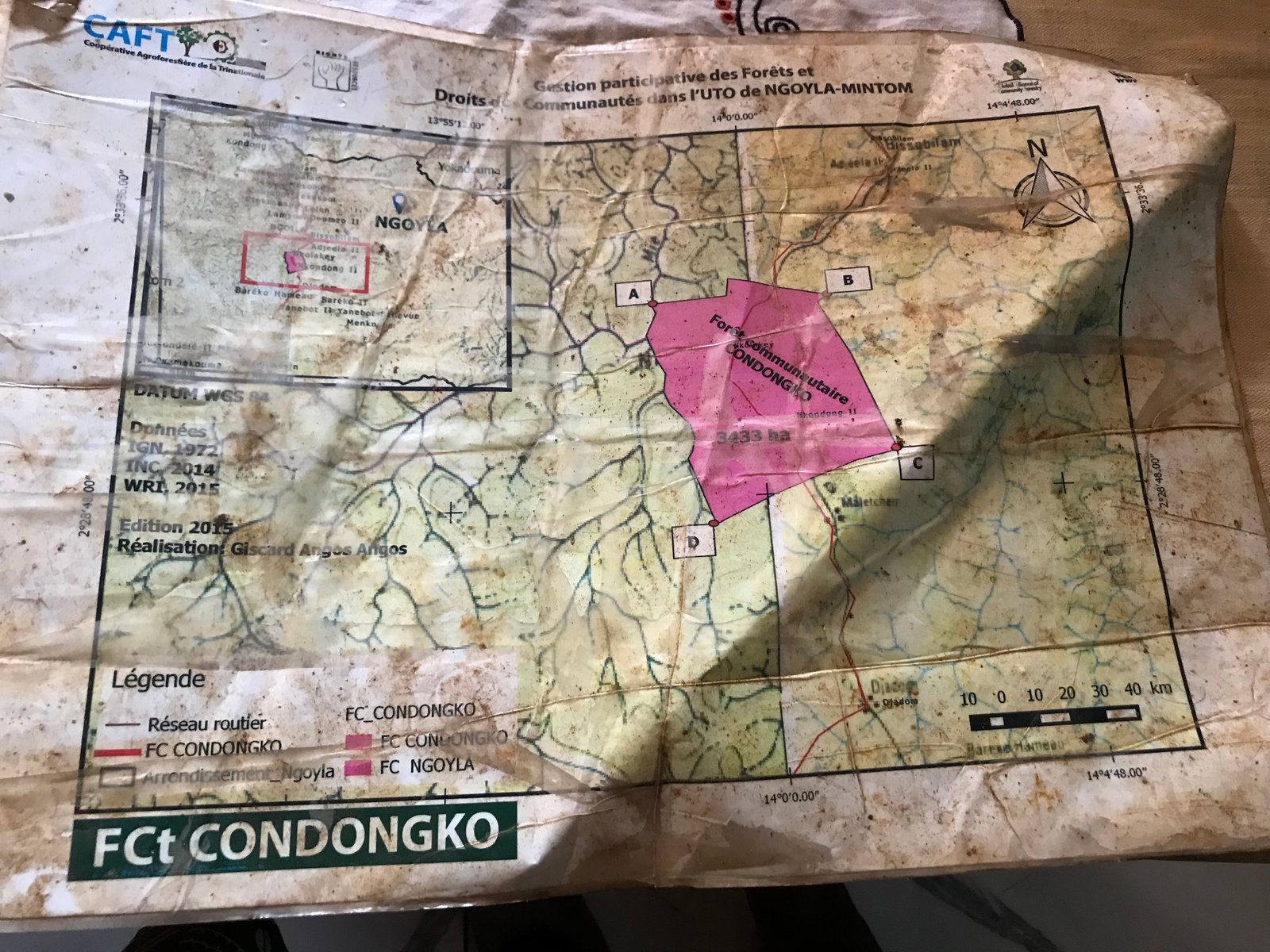
Map of Condongko Community Forest in Ngoyla , East Region of Cameroon
Youths in Nemeyong II express fear following the deaths of several management committee members, which they link to disputes over forest revenues. “We have reached a point where many people, like myself, can no longer get involved in managing this community forest. I am in favor of preserving it to sell carbon credits,” says Yves Mebia, secretary-general of the management committee, a Nephew who grew up in Nemeyong II. This view is shared by Gaïtan Mabé Mabé, youth representative in the Nemeyong II community forest management committee. Besides the problems, the village has returned to poverty. “Since the logging suspension, we have fallen back into a state of poverty worse than what we experienced before. Without logging, there is no activity in the village,” laments women’s leader Evina.
Beyond the financial challenges
Dr. Samuel Nguiffo, Executive Secretary of the Center for Environment and Development (CED), says the community forestry model has largely underperformed, with significant responsibility lying with the government for failing to provide promised technical support.“For SMP, communities spent more than FCFA 15 million ($26.079). Villages turned to forestry businesses. The government forced impoverished communities to turn to logging companies, while wealthy and powerful individuals in the community, who provided the funds, made decisions. The latter hired logging companies and had to recover the money spent on logging, igniting conflict while the forest vanished,” Nguiffo says.
He further questions why the focus was on logging and not ecotourism, and why a company is given three years of logging to finance its SMP in a Forest Management Unit (FMU) area designated for industrial logging concessions covering millions of hectares, while a village community must provide all current documentation before the start of logging. He says the government failed to provide the promised free technical assistance and questions why the communities should be punished for failing to manage their forest.
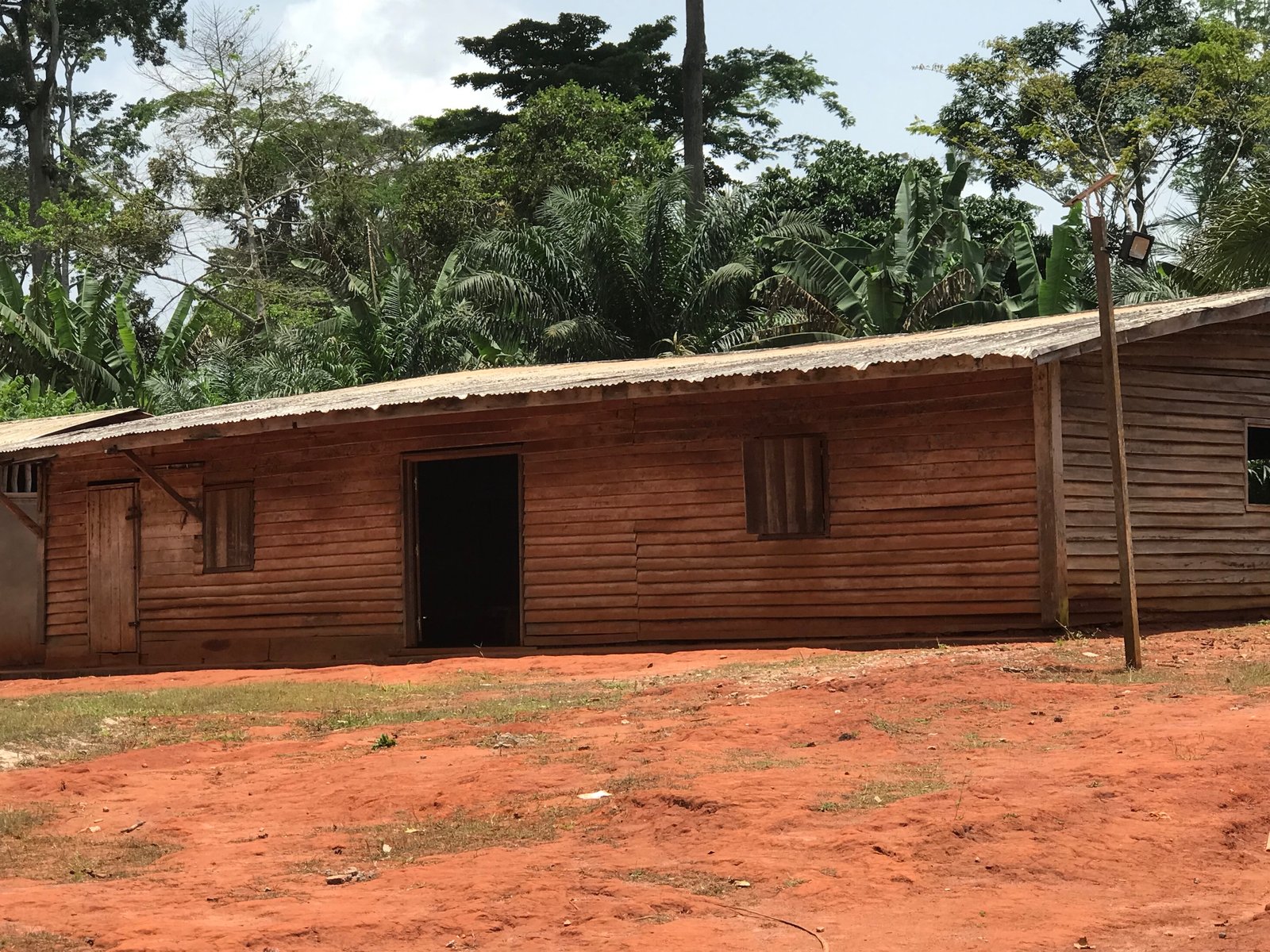
Solar lamp in Nemeyong II village
Nguiffo laments that “government-empowered commercial companies altered data and gave misleading information, allowing the harvesting of 30,000 m³ of timber from a community forest, with less wood resulting in timber trafficking. Thus, loggers had to steal wood from other sources to complete the required volumes; as a result, community forests began to degrade.” Ngniado shares the same view, adding that “Community forests non-compliant with the current regulation of the sustainable management measures contained in the SMP- where logging has been irregular, where plot boundaries have not been respected, or where managers have sold waybills to illegal loggers to launder timber- have contributed to the degradation of community forests.” Meanwhile, “a Center for International Forestry Research/World Agroforestry, CIFOR/ ICRAF research on the cocoa production and community forests carried out in three community forests shows degradation, with more than 65 percent converted to cocoa farms and other agricultural uses in the Grand Mbam center region of Cameroon,” says Divine Foundjem Tita, researcher at CIFOR/ICRAF. He adds, “This may be a similar situation in other community forests located in cocoa production zones.”
Correcting the Course
While community forestry is the only way for active participation of members, with a say in management, conception and implementation were skewed. “Community forests were created without sensitisation on management, and that there was a rush with the sole idea being timber exploitation,” Tita regrets. Community forest governance failure is no secret to MINFOF, which acknowledges the interference of certain rich and influential persons in the community, who, having secured funding, seek to monopolize everything.
“Of the 830 community forests established across Cameroon’s ten regions, only 300 still exist. Community forests seem to be functioning better in parts of the Northwest and East regions with the support of international NGOs, states Charles Ndifor Nchamcham, head of the forestry unit at MINFOF. He indicates that community forests vary according to ecological zone. Following these observations, “MINFOF decided to revisit the policy through a revision of attribution norms and procedures of the community forest management manual to align with community forestry dynamism. Thanks to financial support from the United Kingdom, the manual was revised. By revising management standards and procedures to adapt them to the new dynamics, new pricing schedules will now be set based on ecological and climatic zones. We will be able to have forests offering services such as ecotourism, natural resource conservation, and carbon sequestration. It will no longer be solely about timber harvesting,” Nchamcham notes.
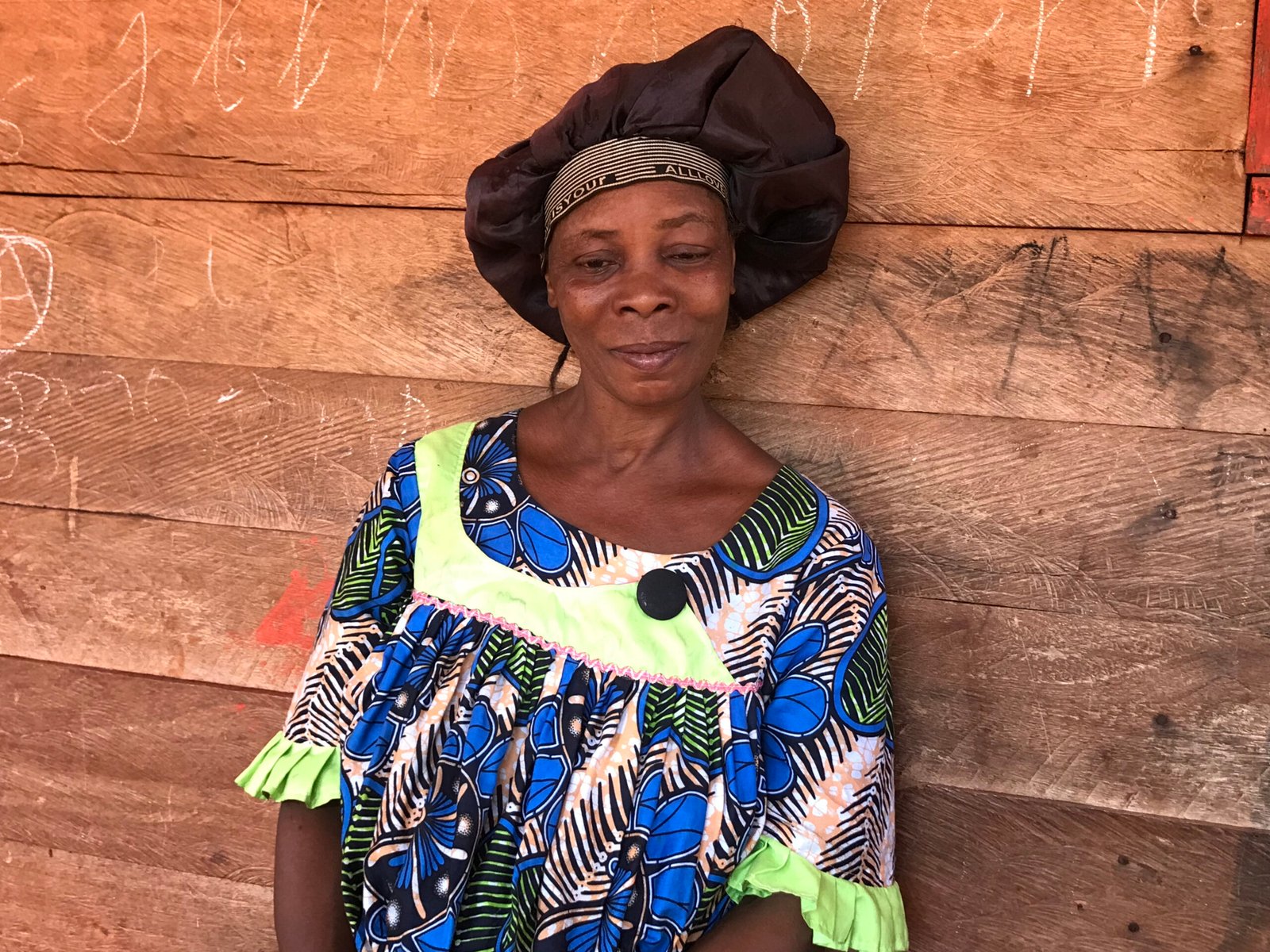
Laurentine Biwélé Evina, a member of the Nemeyong II community forest management committee
The next step is to sensitize the population to understand that community forestry is not only about logging but also about the preservation of natural resources. Community forests that wish to start afresh will be given the opportunity, but must respect the new system. Nchamcham reveals that the two-year provisional concession period, during which communities operate without an SMP, is a window to source finances to pay for the plan. “There is a reflection on how to turn the two years into a certification period to evaluate factors like development and environmental protection, as a prerequisite for the signing of a permanent concession,” he adds.
A management committee will be created in about a year with representatives from MINFOF, the relevant local municipality, and the community. For every violation, managers will be held accountable in court, as funds derived from the management of community forests are public funds, the forestry boss reveals. “Contracts will be signed, and managers reevaluated and subjected to yearly control of resources and projects; if not respected would be liable to judicial pursuit, ” Nchamcham states. Despite fears, no community forest can be converted into an FMU, especially since it is classified as a non-permanent domain. “The second-generation computerized forest information management system, SIGIF II, in 2022, does not permit illegal logging. Timber may be cut illegally, but only for local sale,” he maintains.
Conservation and carbon services as a way forward
Henri Mevaa, PAPEL Coordinator, who has contributed to the creation of community forests, acknowledges that the success of this initiative in its early stages was thanks to NGO and government funding. But, he says procedures have become increasingly cumbersome over the years. “Every year, annual logging permits are required. Communities face difficulties with SIGIF II, since the data must be obtained through an online platform. Besides, in remote areas, internet connectivity is irregular, and communities require outside expertise to manage their accounts. On the operational premise, there are governance issues, illegal logging, and logging partnerships with private operators who take a portion of the community forests’ revenue. In short, community forestry in Cameroon is really in a slump.”
Mevaa is convinced that “The carbon initiative, i.e payments for keeping forests standing instead of cutting them, is the way forward for the fight against climate change and local development. Ndongmo and Nguiffo agree to the carbon initiative, which is slow to take shape because regulation in Cameroon has not evolved sufficiently. Despite grey areas, such as carbon ownership, the quotas, and the carbon credit issuer, he suggests, “We want to see carbon projects succeed, for people to preserve their forests and receive benefits for their efforts. This is possible because they will set aside specific areas for different purposes.
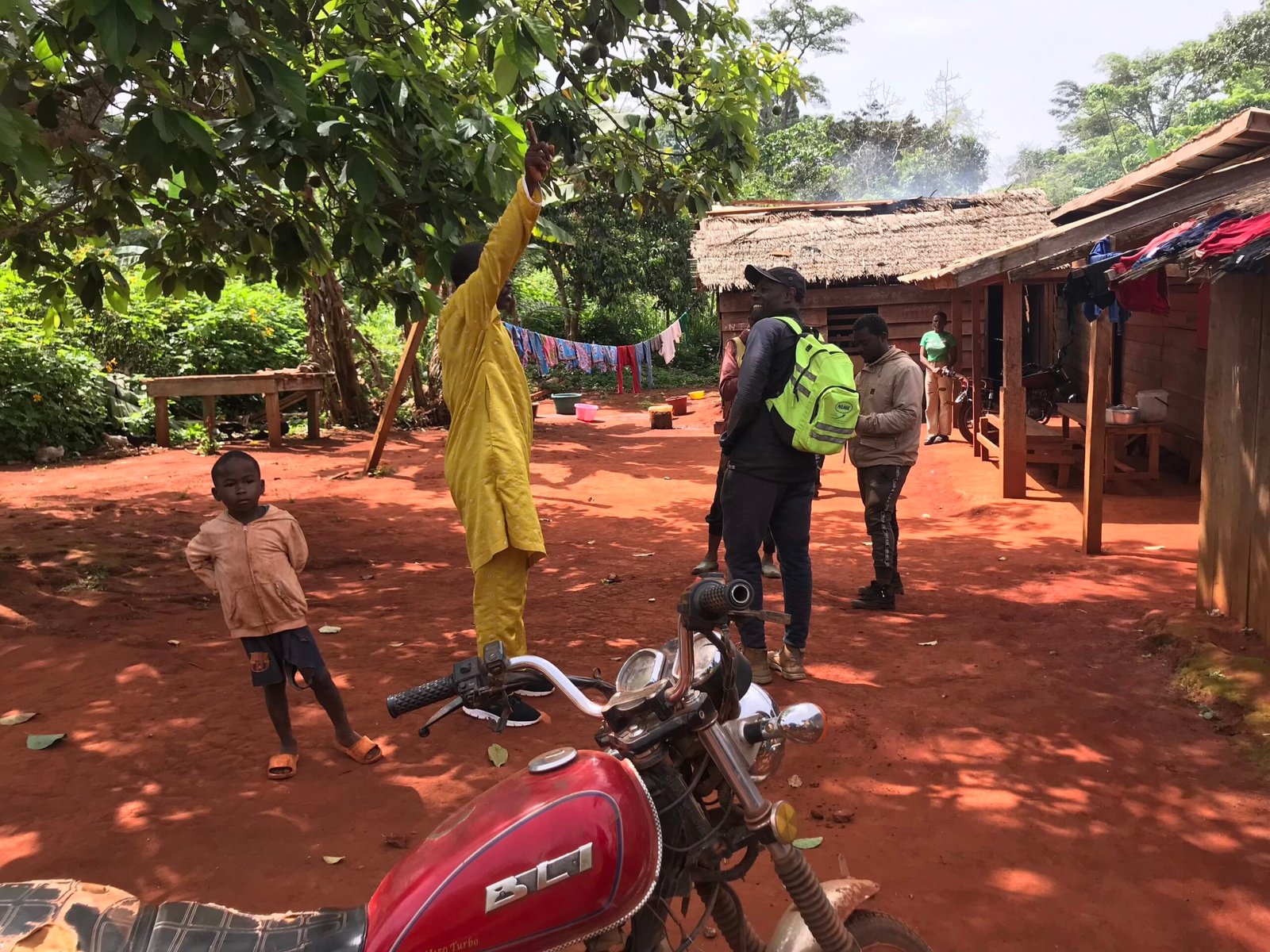
Nemeyong II village, in Messamena, East Region
According to Ngnaido, community forests’ existence depends on finding answers to environmental and biodiversity problems, such as combating climate change, biodiversity loss, and ameliorating the living conditions for local people. “We must prioritise biodiversity conservation, enhance the regulatory framework, and diversify revenue streams for local and indigenous groups,” the WWF expert concludes.
By Adrienne Engono Epse Moussang & Leocadia Bongben Jisi
“This story was produced with the support of Internews’ Earth Journalism Network.”
