
The Integrated Forest Landscapes Management project in Cameroon has recorded 66 percent progress towards its expected results and impacts, with two years left before its completion, Minister of the Environment, Protection of Nature and Sustainable Development, Pierre Hele has said.
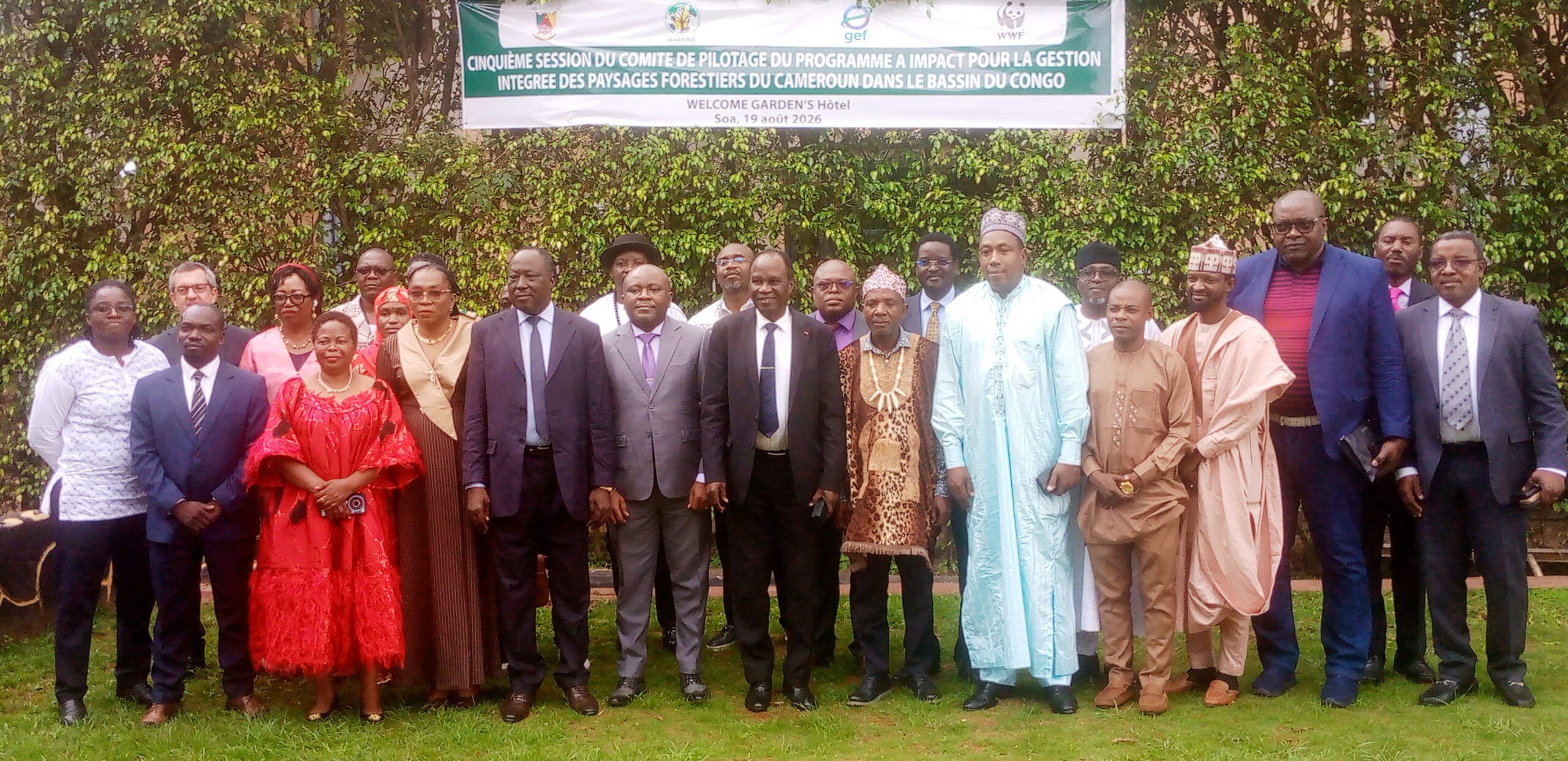
Cross section of participants at 5th session of COPIL on integrated forest landscapes management
He made the disclosure on August 19 in Soa, Yaounde while opening the fifth ordinary session of the project’s Impact Programme Pilot Committee (COPIL), attended by about 44 participants.
Funded by the Global Environment Facility (GEF), the project seeks to strengthen the integrated management of forest landscapes of global importance in the Congo Basin, while preserving biodiversity, expanding economic opportunities and improving the livelihoods of forest-dependent communities.
Speaking at the session, Hele said the GEF7 Impact Programme was designed to address major drivers of deforestation, forest degradation and biodiversity loss through an inclusive approach that gives indigenous peoples and local communities a greater role in managing natural resources.
The programme operates alongside similar national projects in the Central African Republic, Democratic Republic of Congo, Equatorial Guinea, Gabon and the Republic of Congo, with the aim of driving coordinated and sustainable transformation across the Congo Basin.
Hele highlighted several achievements recorded since the project began on April 28, 2022. These include improved management of 1.19 million hectares of protected areas and the validation of local management plans and sustainable development initiatives in the Ngoyla and Mintom councils, covering about 1.2 million hectares.
He said nearly 16,000 trees, including 4,300 ebony trees and 11,700 fruit trees, had been planted, helping to restore about 34 hectares of degraded land. The project has also supported the successful habituation of gorillas for tourism.
On livelihoods, the Minister said more than 40,000 people had benefitted directly from the project, almost half of them women. He added that communities had generated more than FCFA 220 million from the sale of non-timber forest products, with proceeds invested in improving living conditions.
He urged stakeholders to maintain dialogue and strengthen collaboration among councils, private-sector partners and local communities.
WWF Cameroon National Director, Alain Bernard Ononino, said WWF which serves as financial administrator of the GEF7 Impact Programme, had ensured the proper use of funds across its various components.
He said the programme had also improved management of the Campo Ma’an and Lobéké national parks, promoted ecotourism and increased the involvement of indigenous communities in conservation.
In Cameroon, the programme covers the Campo Ma’an, TRIDOM and Sangha Tri-National landscapes, including areas around Campo Ma’an and Lobéké national parks.
By Nformi Sonde Kinsai

